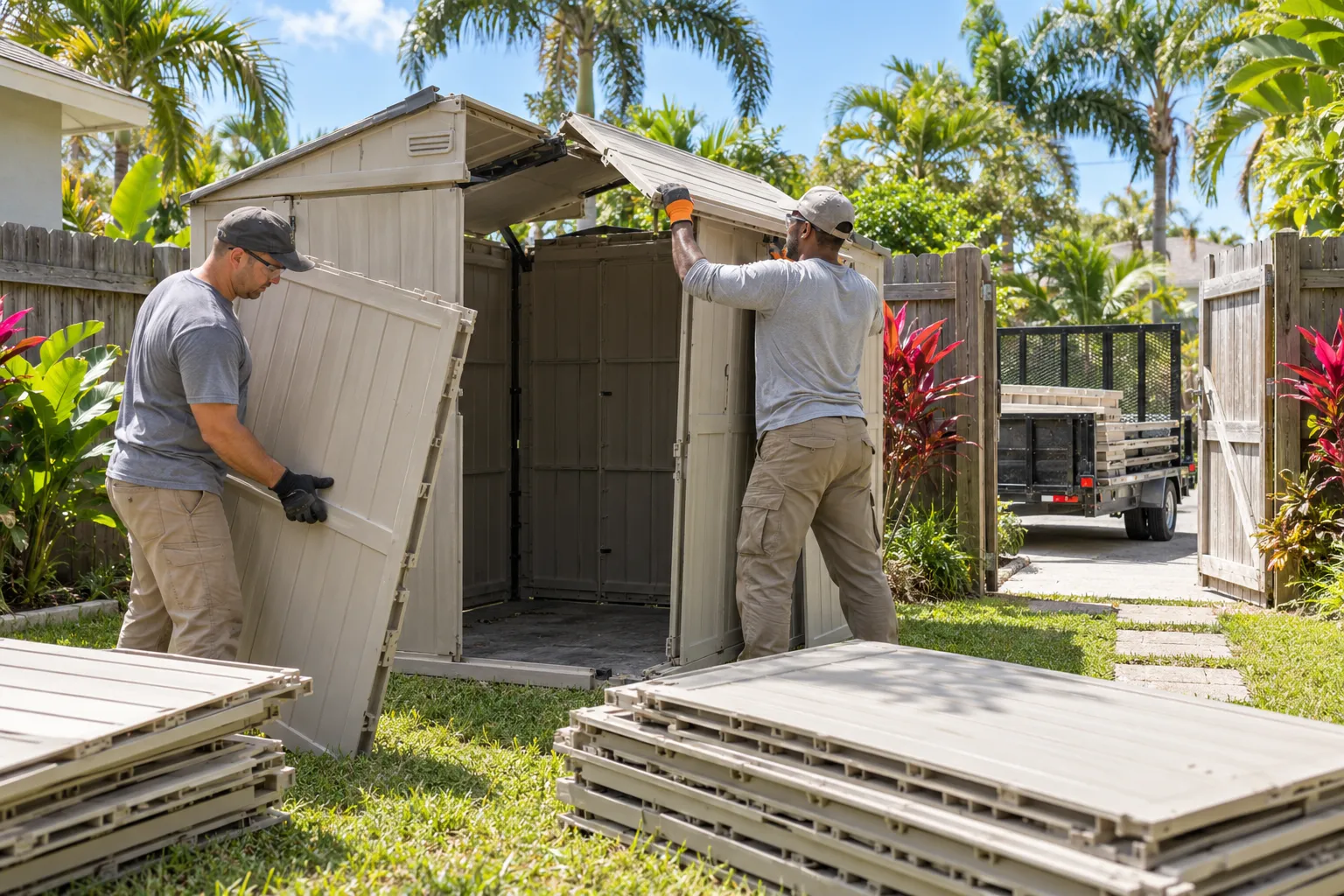
Many resin sheds use interlocking panels, but age, UV exposure, storm damage, and anchors determine what can be separated cleanly. Start with the structure and the route out of the yard. Those two pieces of information explain most of the practical constraints a crew needs to review.
Interlocking does not always mean reusable
Newer panels may release at their tabs and fasteners. Older plastic can become brittle after years of sun exposure. A panel that flexed when installed may crack when moved, so reuse should never be promised from photos alone.
Check the base and fasteners
Look for screws at roof joints, corner posts, door hinges, and the floor. Note whether the shed is anchored through a molded floor or attached to a separate platform. Hidden anchors can change the amount of work.
Decision guide
Choose careful disassembly when panels are stable, fasteners are accessible, and reuse is a real goal.
Plan ordinary removal when panels are cracked, warped, storm-damaged, or too brittle to handle intact.
Treat the base, platform, and contents as separate scope items unless the quote includes them.
Make room to stage panels
Resin panels can be broad even when they are light. Clear a flat space near the shed so removed sections can be stacked without blocking the exit route. Keep vehicles, pets, and children outside the work zone.