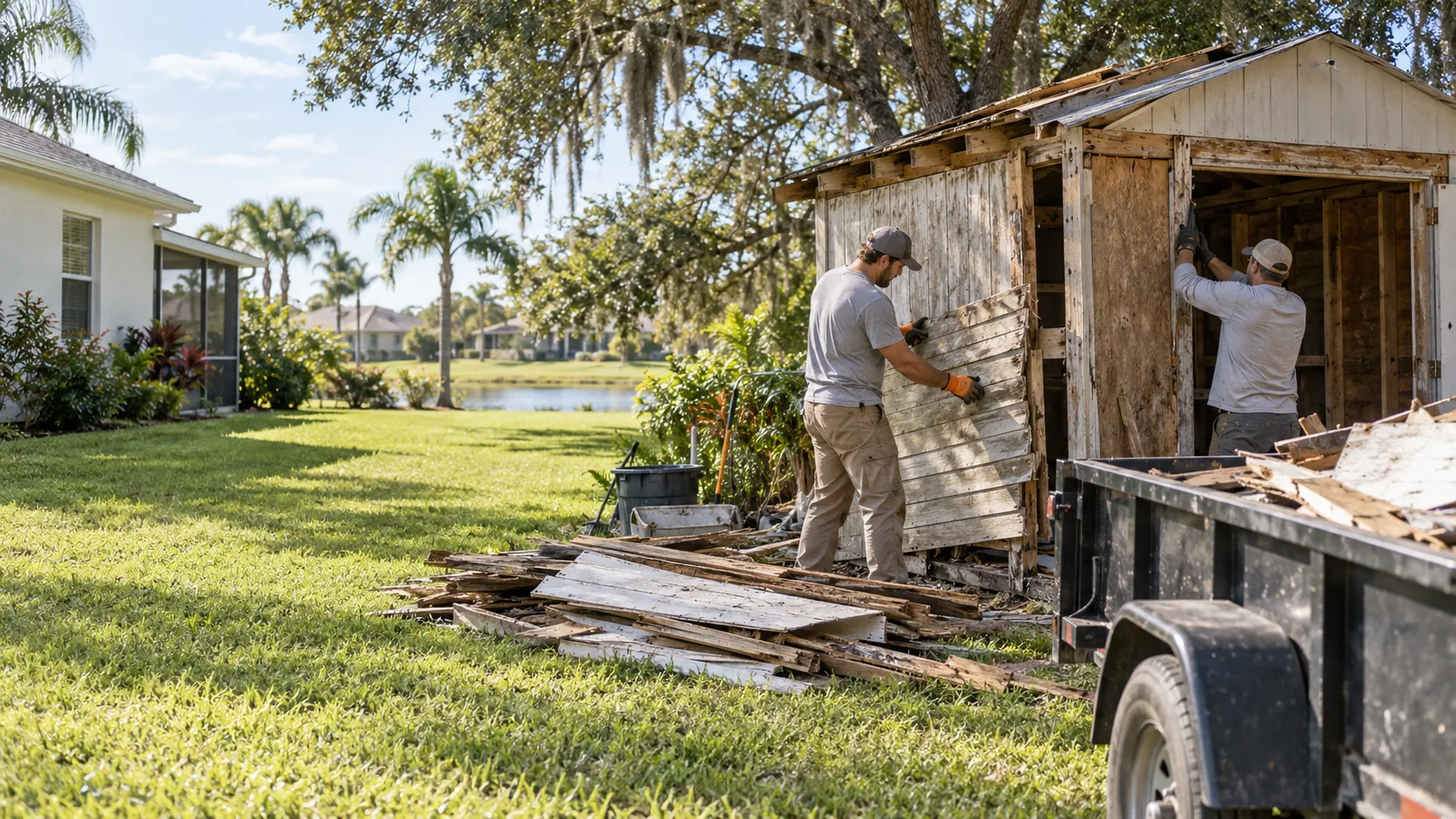
A simple keep, remove, and special-handling sort makes a shed cleanout easier to describe and safer to review. Start with the structure and the route out of the yard. Those two pieces of information explain most of the practical constraints a crew needs to review.
Make three visible groups
Set aside items that stay, ordinary items you want reviewed for removal, and materials that need special handling. Keep the groups separate so photos show their approximate volume. Do not open leaking, swollen, or unknown containers.
Flag restricted materials early
Paint, fuel, pesticides, propane cylinders, batteries, pool chemicals, and unlabeled liquids should never be hidden inside bins. Photograph labels from a safe distance and ask whether another disposal route is required.
The same rule applies to sharp tools, broken glass, ammunition, and medical waste. Tell the estimator what is present before anyone starts carrying items.
Cleanout checklist
Mark the items that stay with removable tape or move them to one side only when it is safe.
Photograph the full interior before moving anything.
Group ordinary loose items without overfilling boxes or bags.
Measure the narrowest gate and clear movable obstacles from the route.
List heavy items, shelving, attached cabinets, and anything connected to power.
Keep the structure in view
A cleanout can reveal rot, pests, water damage, or an unstable floor. Stop if the shed shifts or walking inside feels unsafe. Contents removal and structure demolition should be scoped together when one affects the other.